Category Archives: South America

Inca Trail to Machu Picchu

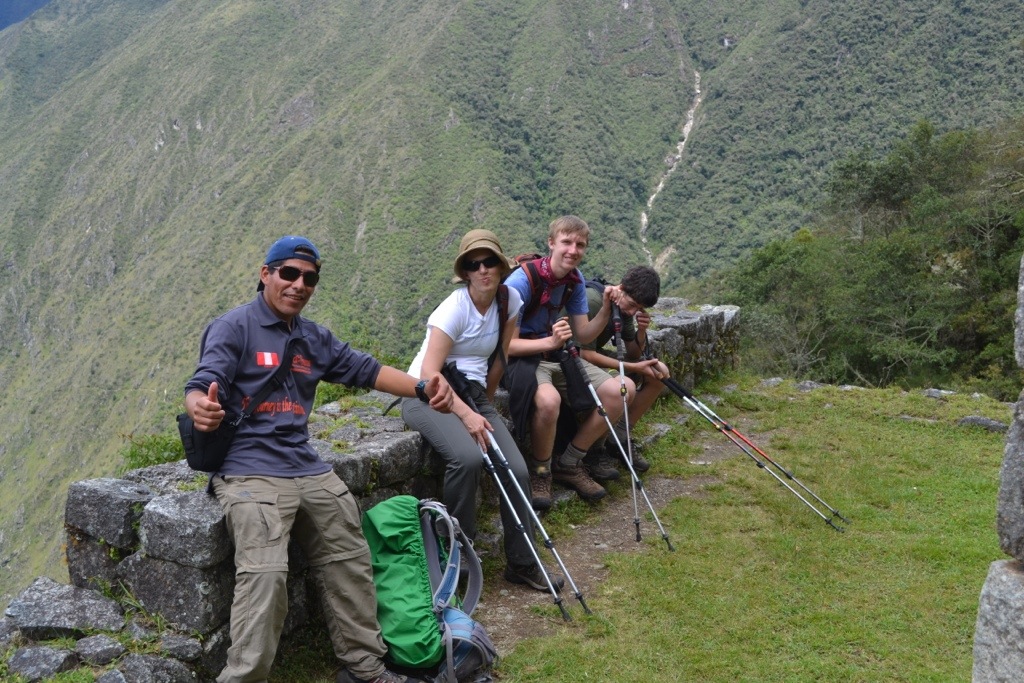
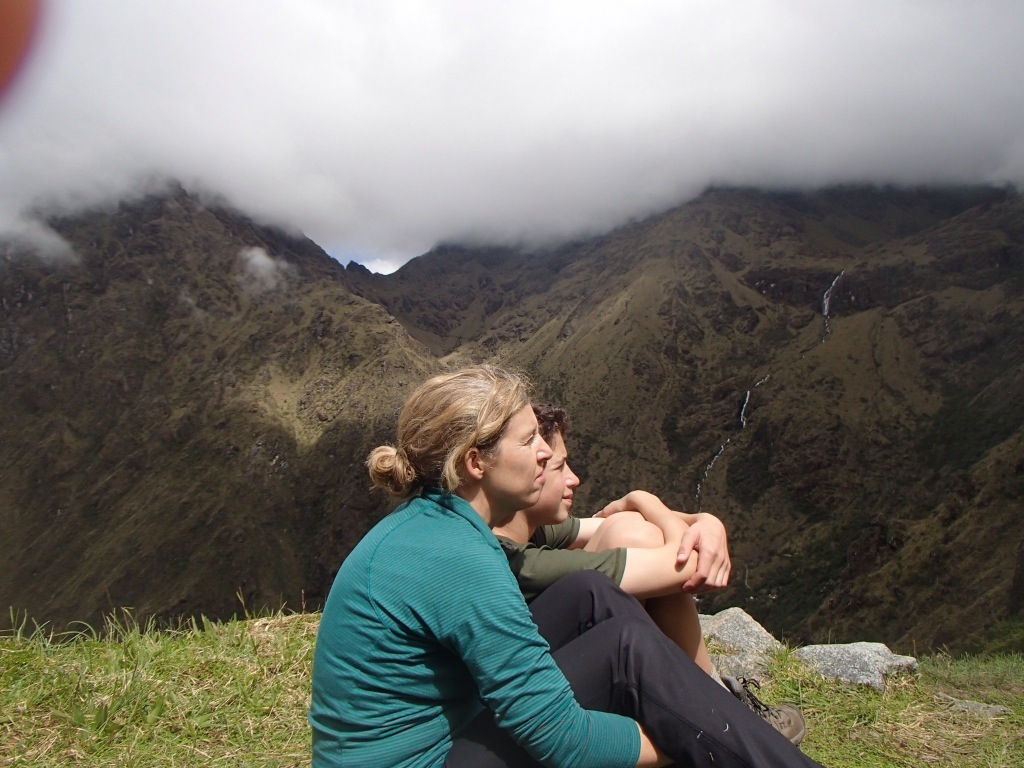
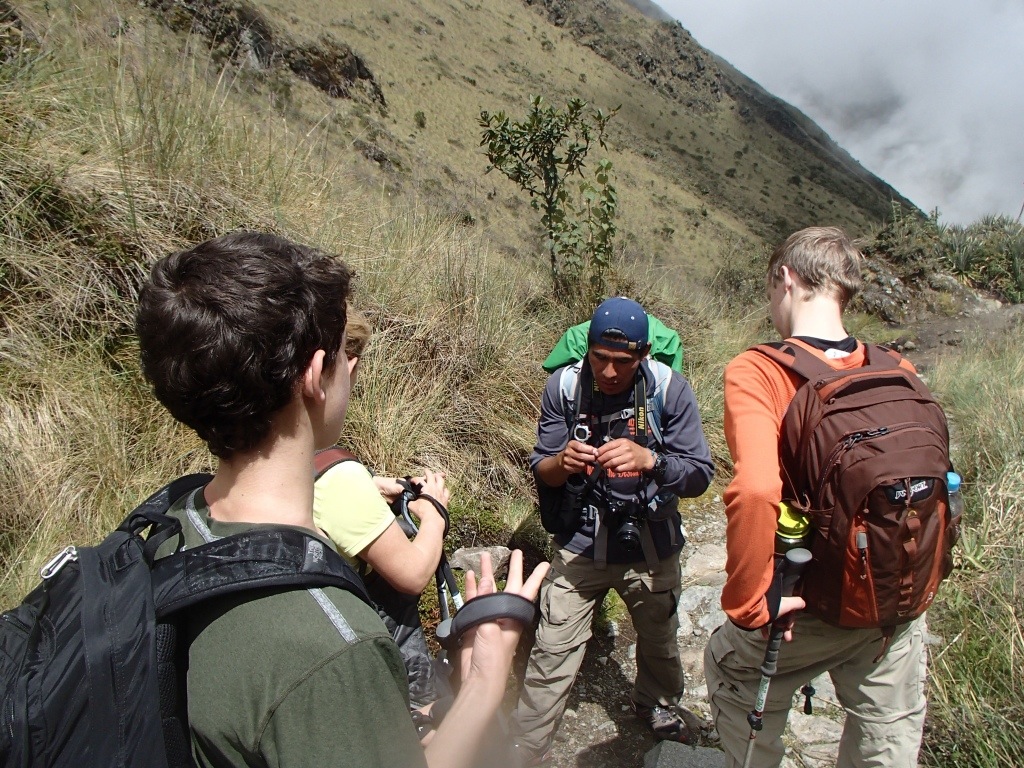
Whoa..that was tougher than expected. Four days of hiking peaking over 13,829 feet in altitude before descending into Machu Picchu.

On one hand, Carter and I looked around and saw the average age of other hikers doing the trail was early twenties and we were quite proud of ourselves… on the other hand, we had just day packs and trekking poles while our Andean porters lugged up to 60 lbs each (one of them being 49 years old) literally jogging past us up the trail to the next campsite while we gasped for air. Gasping for air while hiking, during breaks, during dinner and then at night in our tent while trying to sleep despite three days of acclimatizing in Cusco, Peru beforehand.

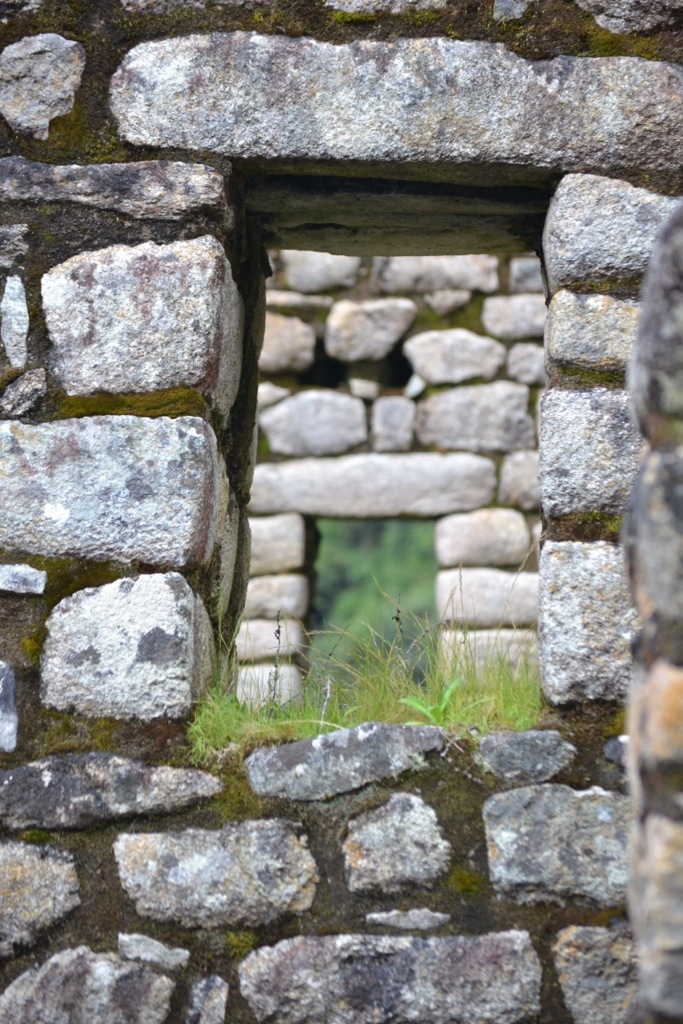
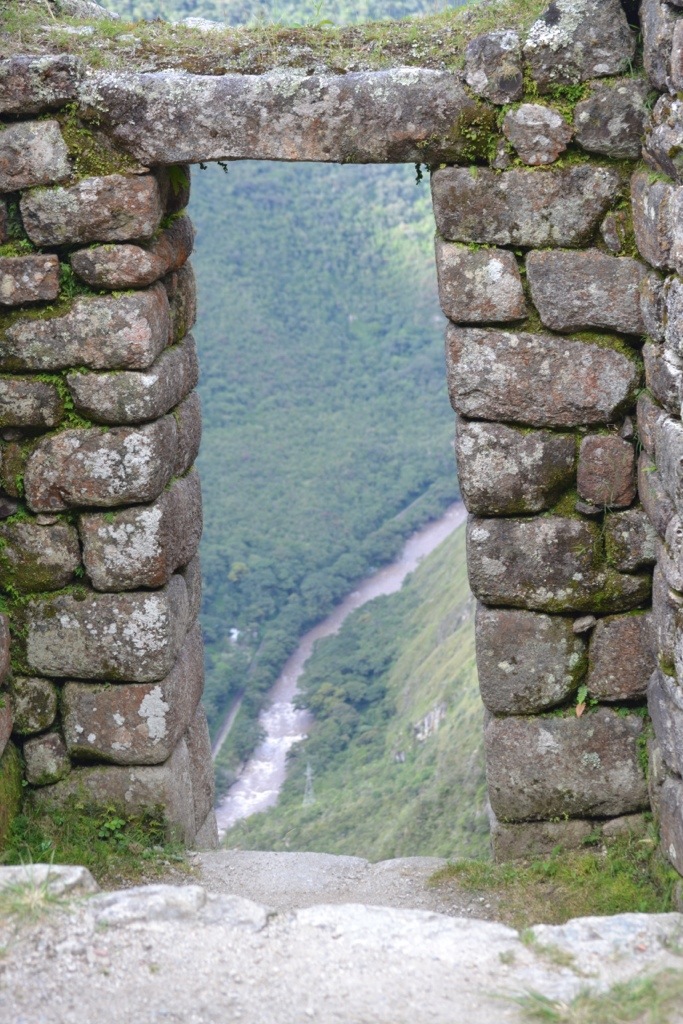
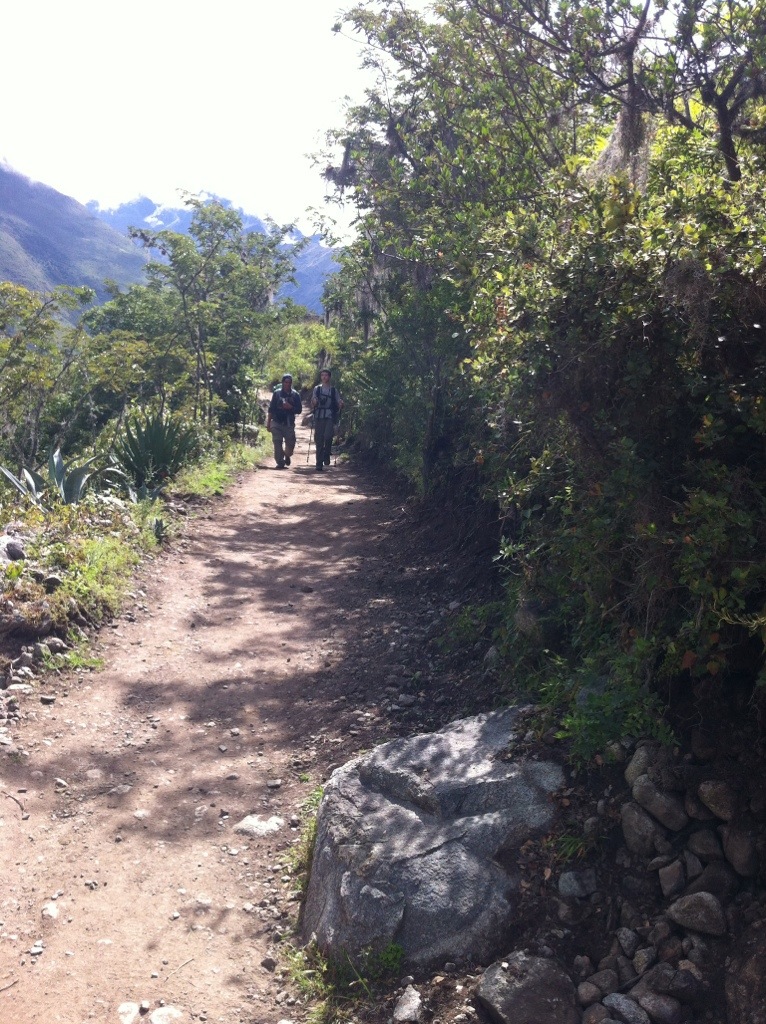
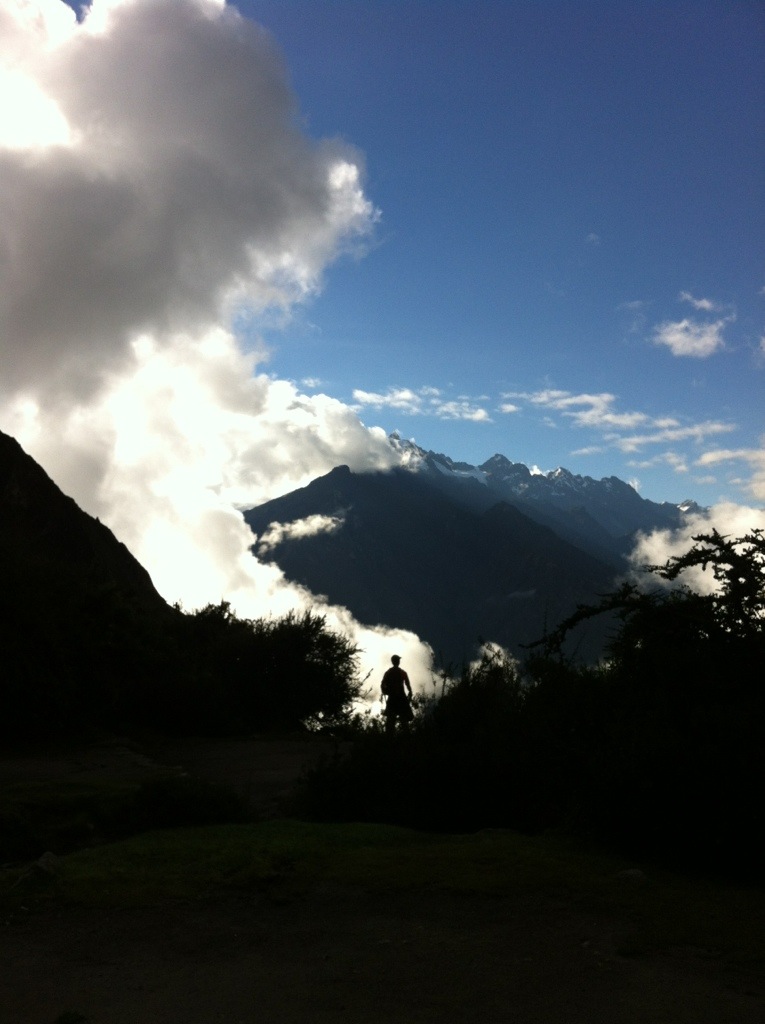
The trail is beautiful and steep as it crawls through the mountains and passes through several Inca ruins and spectacular views setting the stage for Machu Picchu.

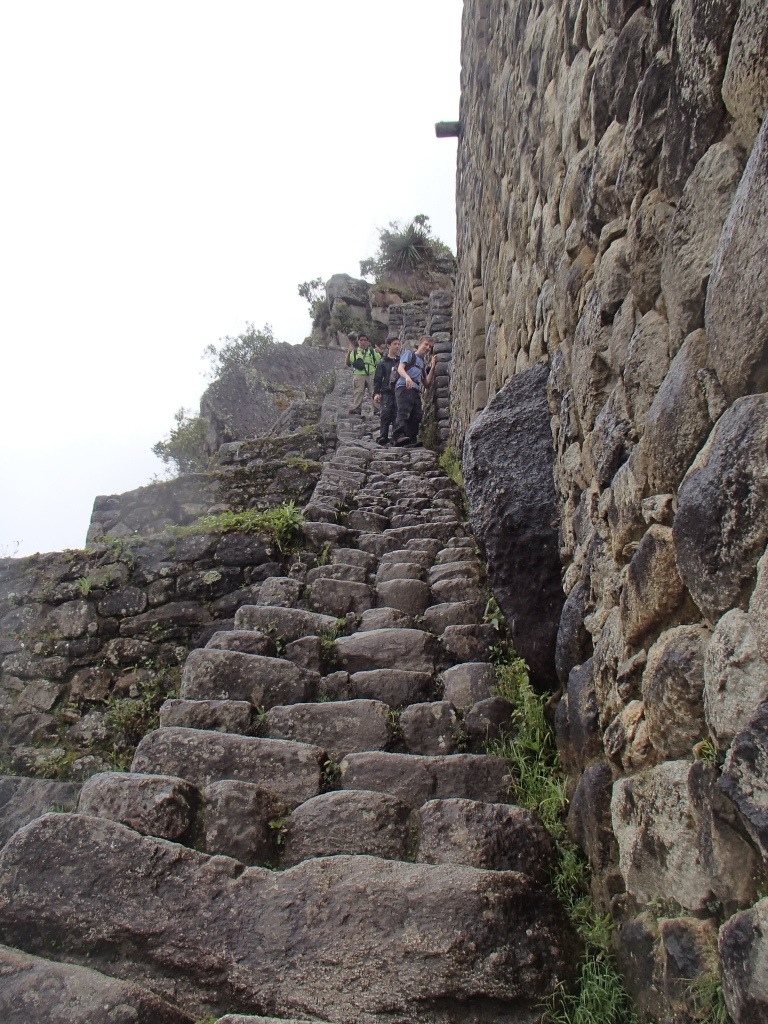
Our guide, Sabino, was half crazy and left us laughing many times with his off the wall comments. Every time we would round a corner and come upon another spectacular ruin, he would exclaim ‘Jesus Christ!’, as though he were seeing it for the first time despite 150 previous trips up the trail. In the steepest sections where we were in a four point stance (crawling) going up the inca stone stairs and trying not to pitch off into the valleys below, our guide would be running up and down with his hands in his pocket chuckling. When he was thirsty, he would grab a drink from a stream alongside the trail and then remind us that we could not do so because we had ‘baby stomachs’.

The final morning, we woke at 3:30am and hiked to Machu Picchu in the darkness to beat the crowds and greet the sun (it was cloudy).

Machu Picchu – amazing as advertised. But crowded with visitors and we soon missed the solitude of the trail and the opportunities we enjoyed exploring other inca villages by ourselves during the previous four days.

Harry

20130406-185842.jpg

20130406-232705.jpg

20130414-202555.jpg

20130414-202605.jpg

20130414-202651.jpg

20130414-202713.jpg

20130414-203045.jpg

20130414-203115.jpg

20130414-203155.jpg

20130414-203808.jpg

20130416-190209.jpg

Quilmes contra Los Argentinos Juniors – Buenos Aires

Here in Argentina soccer is a game of passion. Walking to the game we passed pro-home team slogans graffitied on the walls. When we arrived outside the stadium, we found throngs of people anxiously waiting for the game to begin. A huge armored police car stood behind police in riot gear with tear gas canisters strapped to their chests. In booths nearby, police manned fingerprint scanners ready for any hooligans. When we reached the gate, the attendant asked in Spanish, “Where is it (meaning the ticket)?” He offered no smile or welcome and was our only employee interaction.

When we reached our seats (free seating by section) we saw a unique looking stadium. It was a smallish arena of typical stadium architecture with concrete stands but had some post-construction developments. The players on the field were protected from the fans by tall Lucite walls with barbed wire on top. The other team’s fans were placed on the opposite side of the field. They separated the two groups of opposing fans further by not selling tickets in the section directly adjacent to the visiting team’s section to avoid confrontation. Both sides of this section were cordoned off by similar glass and double-sided barbed wire. Curiously, there also wasn’t a visible game clock or scoreboard so that last second goals are less tense. This led to a seemingly random ending of the first half and later the game. Also, no alcoholic beverages were sold during the game and none could be brought in. Beverages could only be purchased in paper cups.

To start the game, an inflatable tunnel that ended a third of the way onto the field was put up to protect the other team from flying debris… And they were off! A close 2-1 then 3-1 loss ensued with the other team’s fans singing for the full 90 plus minutes! They had brought bass drums and a few of them even had horns to play the team song. The whole crowd was jumping, pumping arms, clapping and singing in unison causing a wave to ceaselessly rise and fall on the other end of the field. As our team started to lose and the other team’s fans subsequently began to wave their banners more and more our fans got bitter. One fan proceeded to curse out his own team for the rest of the game. “Vos madre es un caballo!”

At half time the players and some fans switched sides of the field – the home fans so that they could continue to catcall the enemy goalie. Half time was a short break in the action for players and fans alike, but soon the dull roar began again as play continued. Both teams and fans played and cheered hard respectively. However, the final score of the game was 3-1 Quilmes. The head referee had checked his secret game time watch and had decided to suddenly call it all to a close. The referees themselves got booed thoroughly, as all over the world, though here with a bit more bite than bark. The referees make about $2,000 a month but the fans passion requires them to live and work far away from the games they referee.

After the game, the tunnel inflated to let the other players out. However, this time the home team was the one that needed the exit as they were bombarded by trash and insults as they left the field. With the game over, the other team’s fans quickly were ushered out of the stadium. Meanwhile, the home team fans had to wait 30 minutes more in the stadium to give the smaller number of enemy fans the opportunity to escape. When we finally could go, we once again passed by the riot police. What fun! All these precautions were put in place in the last 10 years to change with the times. In the old days, fans from opposing teams would meet before the match started and mutually decide at which street corner they would meet after so they could have a fistfight. It used to be part of the whole game experience – man on man. However, as guns became more available these fight became extremely dangerous – man with gun on man. The new precautions were then put into place.

Overall, I found this game to be very different from the games back home. Here there was no sugar coating-no smile, no myriad of food choices, no half-time show, no fancy stadium, no colorful signs, no electronic scoreboard, no band/music,n no goodbye. It was just passion. The man next to me cursed his team the whole match, but I know he will go to the next game and the next game and the next. It wasn’t a spectacle. It was all about the game.

-Greer

President “Pepe” Mujica – Uruguay

Recently, we traveled to Uruguay to make a new great friend, Leslie Gething (sister to Baltimore’s Elizabeth). While staying at her beautiful home outside the town of Colonia and enjoying her hospitality, we discussed Uruguay politics and learned about ‘Pepe’ Mujica, the president of the country (we love learning about each country’s political climate and always find taxi drivers to be full of opinion and passion). Pepe, frankly, is an interesting individual regardless of anyone’s political or economic beliefs. His life story of being a guerrilla fighter who was captured and lived in a hole for 14 years before being granted amnesty and then rising through democratic politics to his current position is unique.

Here is a link to a recent NY Times Article about him:

http://www.nytimes.com/2013/01/05/world/americas/after-years-in-solitary-an-austere-life-as-uruguays-president.html

Here is a video of a speech he made at Rio 20 and below this a text translation:

President Mujica – Rio 20

To all of the authorities present here, from every latitude and organization, thank you very much. I want to thank the people of Brazil and Mrs. President, Dilma Rousseff. Thank you all for the good faith undoubtedly expressed by all of the speakers that preceded me.

We hereby express our innermost will as rulers, to adhere to all the agreements our wretched humanity, may chance to subscribe.

Notwithstanding, let us take this opportunity to ask some questions out loud. All afternoon long, we have been talking about sustainable development, about rescuing the masses from the claws of poverty.

What is it that flutters within our minds? Is it the model of development and consumption, which is shaped after that of affluent societies? I ask this question: what would happen to this planet if the people of India had the same number of cars per family as the Germans? How much oxygen would there be left for us to breathe? More clearly: Does the world today have the material elements to enable 7 or 8 billion people to enjoy the same level of consumption and squandering as the most affluent Western societies? WIll that ever be possible? Or will we have to start a different type of discussion one day? Because we have created this civilization in which we live: the progeny of the market, of the competition, which has begotten prodigious and explosive material progress. But the market economy has created market societies. And it has given us this globalization, which means being aware of the whole planet.

Are we ruling over globalization or is globalization ruling over us? Is it possible to speak of solidarity and of “being all together” in an economy based on ruthless competition? How far does our fraternity go?

I am not saying any of to undermine the importance of this event. On the contrary, the challenge ahead of us is of a colossal magnitude and the great crisis is not an ecological crisis, but rather a political one.

Today, man does not govern the forces he has unleashed, but rather, it is these forces that govern man; and life. Because we do not come into this planet simply to develop, just like that, indiscriminately. We come into this planet to be happy. Because life is short and it slips away from us. And no material belonging is worth as much as life, and this is fundamental.But if life is going to slip through my fingers, working and over-working in order to be able to consume more, and the consumer society is the engine-because ultimately, if consumption is paralyzed, the economy stops, and if you stop economy, the ghost of stagnation appears for each one of us, but it is this hyper-consumption that is harming the planet. And this hyper-consumption needs to be generated, making things that have a short useful life, in order to sell a lot. Thus, a light bulb cannot last longer than 1000 hours. But there are light bulbs that last 100,000 hours! But these cannot be manufactured, because the problem is the market, because we have to work and we have to sustain a civilization of “use and discard”, and so, we are trapped in a vicious cycle. These are problems of a political nature, which are showing us that it’s time to start fighting for a different culture.

I’m not talking about returning to the days of the caveman, or erecting a “monument to backwardness.” But we cannot continue like this, indefinitely, being ruled by the market, on the contrary, we have to rule over the market.

This is why I say, in my humble way of thinking, that the problem we are facing is political. The old thinkers. Epicurus, Seneca and even the Aymara put it this way, a poor person is not someone who has little but one who needs infinitely more, and more and more.” This is a cultural issue.

So I salute the efforts and agreements being made. And I will adhere to them, as a ruler. I know some things I’m saying are not easy to digest. But we must realize that the water crisis and the aggression to the environment is not the cause. The cause is the model of civilization that we have created. And the thing we have to re-examine is our way of life.

I belong to a small country well endowed with natural resources for life. In my country, there are a bit more than 3 million people. But there are about 13 million cows, some of the best in the world. And about 8 or 10 million excellent sheep. My country is an exporter of food, dairy, meat. It is a low-relief plain and almost 90% of the land is fertile.

My fellow workers, fought hard for the 8 hour workday. And now they are making that 6 hours. But the person who works 6 hours, gets two jobs, therefore, he works longer than before. But why? Because he needs to make monthly payments for: the motorcycle, the car, more and more payments, and when he’s done with that, he realizes he is a rheumatic old man, like me, and his life is already over.

And one asks this question: is this the fate of human life? These things I say are very basic: development cannot go against happiness. It has to work in favor of human happiness, of love on Earth, human relationships, caring for children, having friends, having our basic needs covered. Precisely because this is the most precious treasure we have; happiness. When we fight for the environment, we must remember that the essential element of the environment is called human happiness.

Harry